Home / Resources / Las Salinas de Calpe: Discover the Calpe Salt Lake and Its Flamingos
lifestyle

Las Salinas de Calpe: Discover the Calpe Salt Lake and Its Flamingos

Sina By Sina 9 February 2026 6 min read
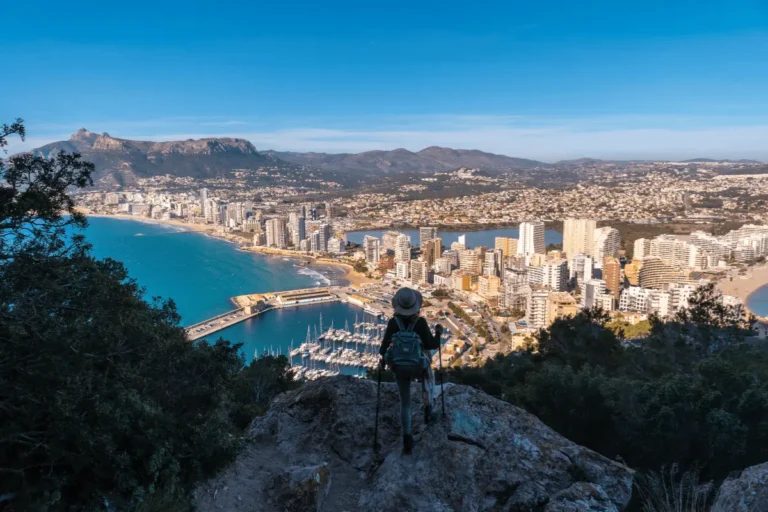
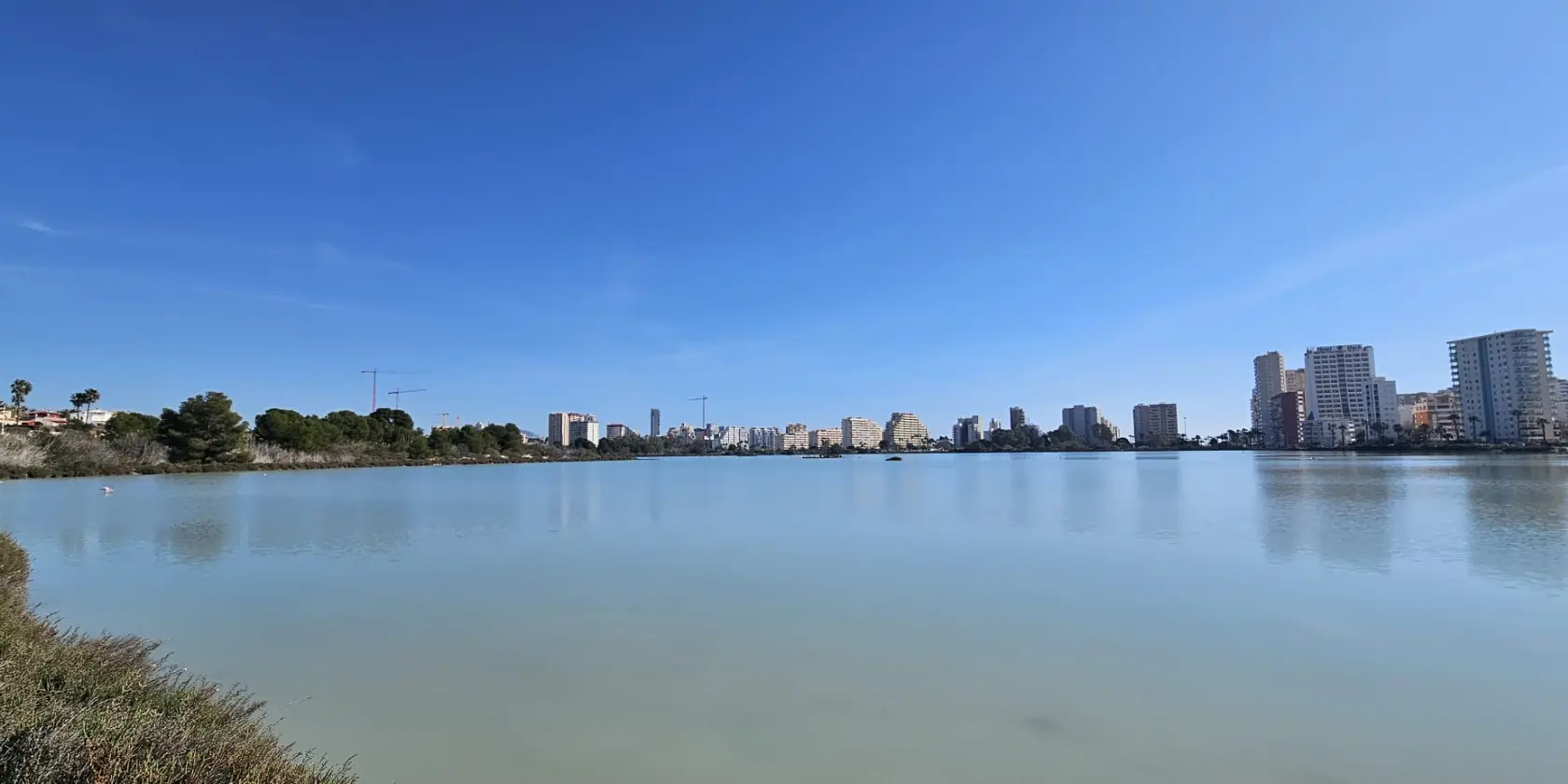
Las Salinas de Calpe salt lake with skyline views and flamingos in Calpe, Spain

You can see Las Salinas from half of Calpe. A large shallow lagoon sitting right at the base of the Peñón de Ifach, about ten minutes on foot from the centre. Most visitors notice it, glance at it, and head straight for the beach instead. That’s a mistake, because up close it is one of the most interesting spots in town.

Las Salinas is a shallow, saline lagoon that changes with the seasons. In summer the water level drops and the exposed salt flats widen. In winter, after the rains, it sits higher and the lagoon fills out. The appearance shifts through the year, which is part of what makes it worth visiting more than once.

The other reason people come here is the flamingos.

The Flamingos
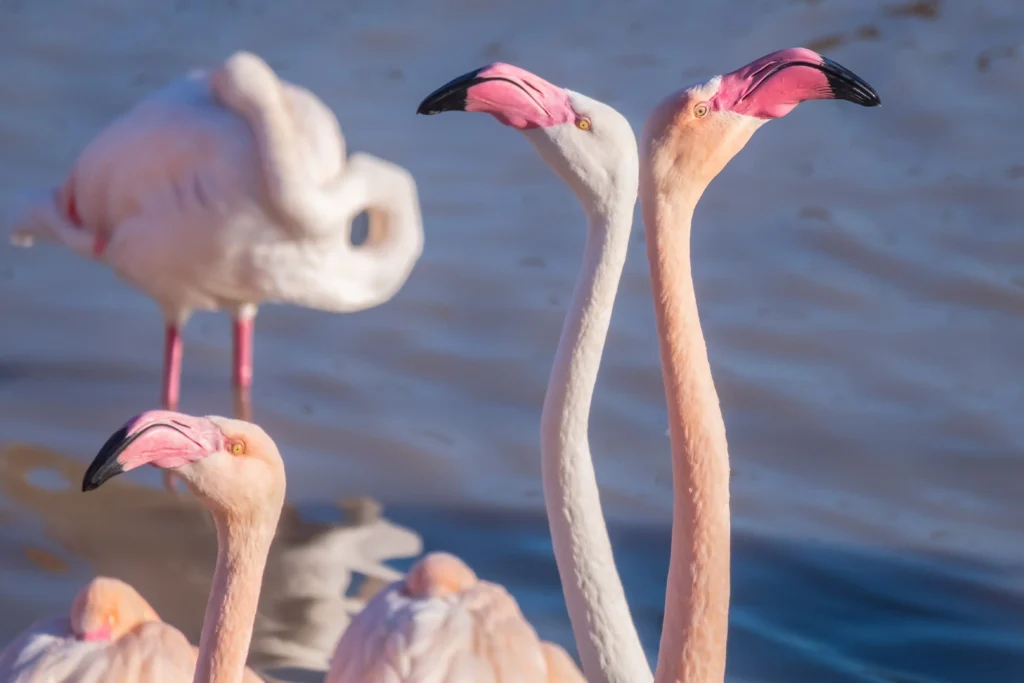
Flamingos at the la salinas in Calpe

They are there most of the year, which still surprises people. Dozens of them standing in the shallow water, and the sight of flamingos against the Peñón de Ifach behind them is one of the most striking images on the Costa Blanca. This is not a rare sighting you have to get lucky for. Walk down to the lake on most days and they will be there.

Numbers can vary through the year, with spring and autumn migration bringing the largest groups. But even outside those peak months, flamingos are a regular presence rather than an occasional visitor.

They are drawn by the tiny brine shrimp that thrive in the salty water.

You don’t need to be a birdwatcher to appreciate it. But if you are, bring binoculars, because black-winged stilts are here year-round alongside the flamingos, and avocets, night herons, and little egrets are all regulars too. Around 173 species have been recorded at the site.

Walking Around the Lake

There are two paths, and they give you different views.

The main one runs alongside the road and takes you about halfway around the lagoon. It is flat, fully accessible, and easy at any pace. This is the one most people use, and it gets you close to the water with clear sightlines across to the birds.

The better walk, in my opinion, is the path on the other side, through the green area set back from the road. From there you look across the water with the Peñón de Ifach rising behind the lake, which is the angle you see in every photograph of Las Salinas and the one that makes people stop. If you only do one, do that side.
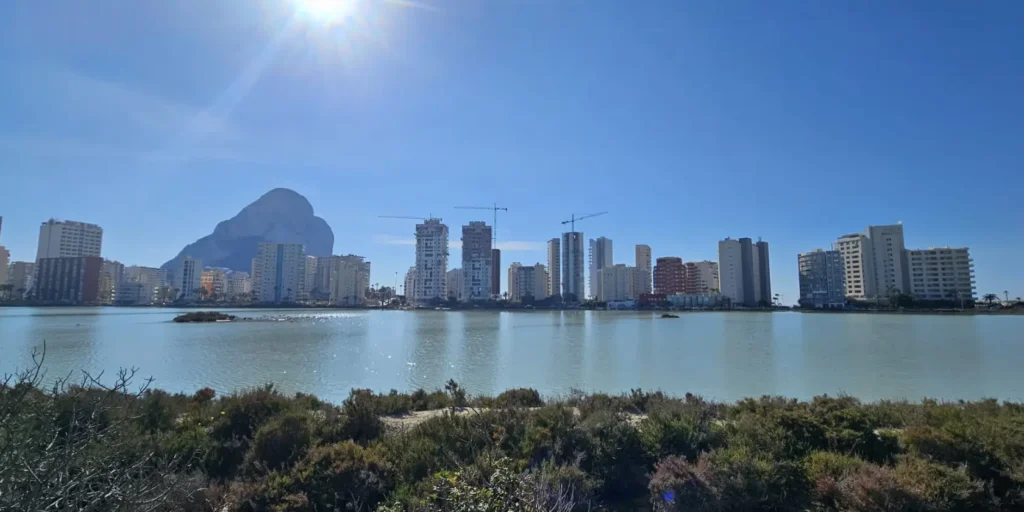
Las Salinas de Calpe with Peñón de Ifach and Calpe skyline reflected in the salt lake, Spain

Between the two, you can spend twenty minutes or an hour depending on how long you linger. Early morning is calm and quiet, with the best chance of seeing the birds undisturbed. Late afternoon is beautiful for photography, especially in spring when the low sun catches the water. Midday in summer is the one time to avoid, because both paths are exposed and shade is limited.

History Of The Las Salinas de Calpe

As you walk, you pass information boards that tell the history of the salt flats, and that history is genuinely interesting. Salt has been extracted here since Roman times. The remains of Baños de la Reina, a Roman archaeological site linked to fish processing and salting, sit nearby on the coast.bFor centuries the salt from this lagoon was a serious local industry, supplying more than forty surrounding municipalities at its peak. Commercial extraction only stopped in the late 1980s, which is more recent than most people expect.

By the end of the 18th century, stagnant water had caused health problems, and production declined. Several attempts were made to modernise it, including efforts by a local figure called Vicente Buigues, known as “Ti Marguí,” who is still remembered for trying to revive the operation. In 1993 the site was officially protected under coastal legislation, and that protection is what allows the wildlife to thrive today.

None of that history is essential to enjoy the walk. But knowing that the flamingos and the salt flats exist because of centuries of extraction gives the place a depth that a beach doesn’t have.

Getting There

From the town centre or the main beaches, it is about a ten-minute walk. You don’t need a car. From Arenal-Bol, head inland toward the base of the Peñón and you’ll see it.

If you do drive, there is a free car park on Avenida Juan Carlos I, right beside the lake. In peak season it fills up, so arriving in the morning is worth it. You can also park in the centre and walk, which is often easier.

Bring water, sun protection, and a hat. The path has no shade. If you’re interested in the birds, binoculars make a real difference. A camera is obvious. Good light, coloured water, and the Peñón behind it make this one of the most photographable spots in Calpe.

Where to Stop Afterwards

There is a German bakery, Deutsche Bäckerei Les Salines, right next to the lagoon with views across the water. It is a good place to sit with a coffee after the walk. The town centre is also close enough that you can loop back to Arenal-Bol and pick a cafe along the promenade.

The whole thing, walk, birds, coffee, works well as a morning or a late-afternoon outing. Combine it with a swim at the beach and you’ve used a couple of hours well without spending anything.

Why It Stands Out

A lot of coastal towns on the Costa Blanca are just beach and apartment blocks. Calpe has that too, but the salt lake is the thing that makes the town feel like more than a resort. A protected wetland with flamingos, Roman archaeological remains on the coast, good beaches, and a proper year-round town centre, all within walking distance of each other. Not many places on this coast can say that.

For anyone thinking about living here rather than just visiting, the salt lake is the kind of thing you appreciate more over time. It gives you somewhere to walk that isn’t the promenade, a view that changes through the year, and a reminder that there is more to Calpe than the seafront.

If that sounds like your kind of place, tell us what you are looking for and Sina will come back to you personally with properties that match.

Sina
Written by

Sina

Founder of Solinea Real Estate, based in Calpe. Sina helps buyers and sellers across the Costa Blanca North with honest, local guidance.
Stay informed

Join the Calpe buyer list

New listings and local market updates for Calpe and the Costa Blanca North. Occasional emails only.

No spam, and you can unsubscribe any time.

Las Salinas de Calpe: Discover the Calpe Salt Lake and Its Flamingos

You can see Las Salinas from half of Calpe. A large shallow lagoon sitting right at the base of the Peñón de Ifach, about ten minutes on foot from the centre. Most visitors notice it, glance at it, and head straight for the beach instead. That’s a mistake, because up close it is one of the most interesting spots in town.

Las Salinas is a shallow, saline lagoon that changes with the seasons. In summer the water level drops and the exposed salt flats widen. In winter, after the rains, it sits higher and the lagoon fills out. The appearance shifts through the year, which is part of what makes it worth visiting more than once.

The other reason people come here is the flamingos.

The Flamingos

Flamingos at the la salinas in Calpe

They are there most of the year, which still surprises people. Dozens of them standing in the shallow water, and the sight of flamingos against the Peñón de Ifach behind them is one of the most striking images on the Costa Blanca. This is not a rare sighting you have to get lucky for. Walk down to the lake on most days and they will be there.

Numbers can vary through the year, with spring and autumn migration bringing the largest groups. But even outside those peak months, flamingos are a regular presence rather than an occasional visitor.

They are drawn by the tiny brine shrimp that thrive in the salty water.

You don’t need to be a birdwatcher to appreciate it. But if you are, bring binoculars, because black-winged stilts are here year-round alongside the flamingos, and avocets, night herons, and little egrets are all regulars too. Around 173 species have been recorded at the site.

Walking Around the Lake

There are two paths, and they give you different views.

The main one runs alongside the road and takes you about halfway around the lagoon. It is flat, fully accessible, and easy at any pace. This is the one most people use, and it gets you close to the water with clear sightlines across to the birds.

The better walk, in my opinion, is the path on the other side, through the green area set back from the road. From there you look across the water with the Peñón de Ifach rising behind the lake, which is the angle you see in every photograph of Las Salinas and the one that makes people stop. If you only do one, do that side.

Las Salinas de Calpe with Peñón de Ifach and Calpe skyline reflected in the salt lake, Spain

Between the two, you can spend twenty minutes or an hour depending on how long you linger. Early morning is calm and quiet, with the best chance of seeing the birds undisturbed. Late afternoon is beautiful for photography, especially in spring when the low sun catches the water. Midday in summer is the one time to avoid, because both paths are exposed and shade is limited.

History Of The Las Salinas de Calpe

As you walk, you pass information boards that tell the history of the salt flats, and that history is genuinely interesting. Salt has been extracted here since Roman times. The remains of Baños de la Reina, a Roman archaeological site linked to fish processing and salting, sit nearby on the coast.bFor centuries the salt from this lagoon was a serious local industry, supplying more than forty surrounding municipalities at its peak. Commercial extraction only stopped in the late 1980s, which is more recent than most people expect.

By the end of the 18th century, stagnant water had caused health problems, and production declined. Several attempts were made to modernise it, including efforts by a local figure called Vicente Buigues, known as “Ti Marguí,” who is still remembered for trying to revive the operation. In 1993 the site was officially protected under coastal legislation, and that protection is what allows the wildlife to thrive today.

None of that history is essential to enjoy the walk. But knowing that the flamingos and the salt flats exist because of centuries of extraction gives the place a depth that a beach doesn’t have.

Getting There

From the town centre or the main beaches, it is about a ten-minute walk. You don’t need a car. From Arenal-Bol, head inland toward the base of the Peñón and you’ll see it.

If you do drive, there is a free car park on Avenida Juan Carlos I, right beside the lake. In peak season it fills up, so arriving in the morning is worth it. You can also park in the centre and walk, which is often easier.

Bring water, sun protection, and a hat. The path has no shade. If you’re interested in the birds, binoculars make a real difference. A camera is obvious. Good light, coloured water, and the Peñón behind it make this one of the most photographable spots in Calpe.

Where to Stop Afterwards

There is a German bakery, Deutsche Bäckerei Les Salines, right next to the lagoon with views across the water. It is a good place to sit with a coffee after the walk. The town centre is also close enough that you can loop back to Arenal-Bol and pick a cafe along the promenade.

The whole thing, walk, birds, coffee, works well as a morning or a late-afternoon outing. Combine it with a swim at the beach and you’ve used a couple of hours well without spending anything.

Why It Stands Out

A lot of coastal towns on the Costa Blanca are just beach and apartment blocks. Calpe has that too, but the salt lake is the thing that makes the town feel like more than a resort. A protected wetland with flamingos, Roman archaeological remains on the coast, good beaches, and a proper year-round town centre, all within walking distance of each other. Not many places on this coast can say that.

For anyone thinking about living here rather than just visiting, the salt lake is the kind of thing you appreciate more over time. It gives you somewhere to walk that isn’t the promenade, a view that changes through the year, and a reminder that there is more to Calpe than the seafront.

If that sounds like your kind of place, tell us what you are looking for and Sina will come back to you personally with properties that match.

Leave a Comment