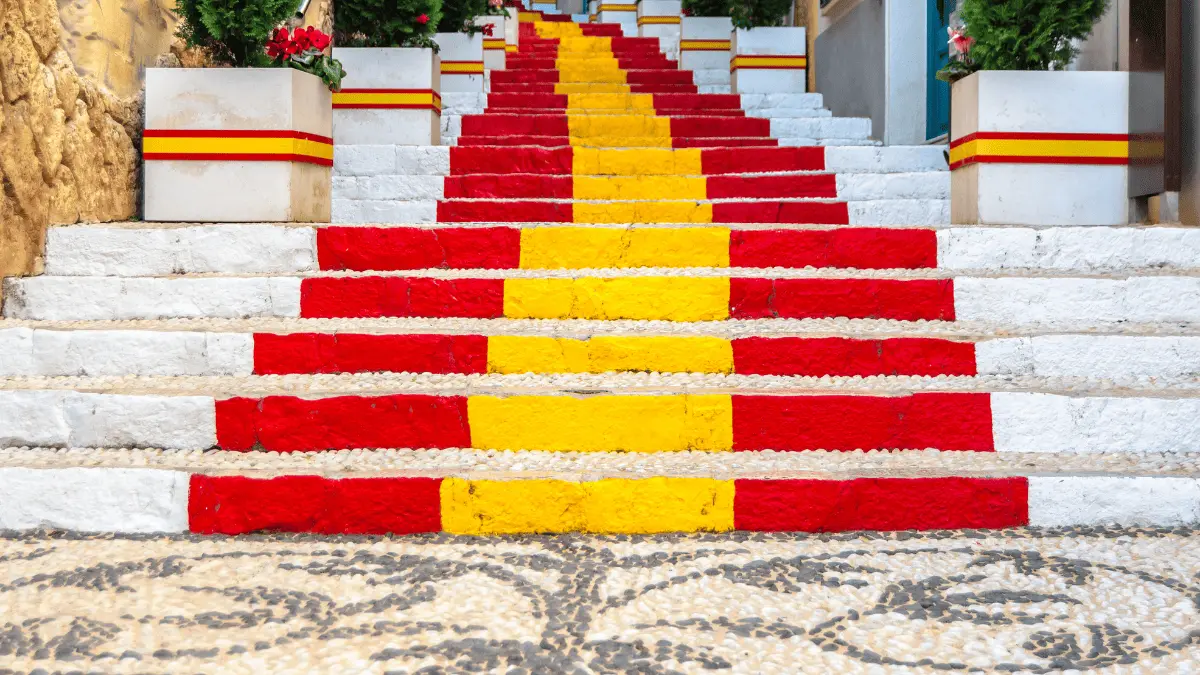
The Spanish flag steps on Carrer de Puchalt are one of the most photographed spots in Calpe. They’re easy to find, free to visit and right in the middle of the old town, so they’re worth adding to a walk around Calpe old town.
The steps themselves only take a minute or two to see, but the real reason to come here is the area around them. Carrer de Puchalt and the surrounding old-town streets are much more interesting to wander around than simply stopping for a quick photo and leaving.
Where to Find Them
The Spanish flag steps are on Carrer de Puchalt in Calpe’s old town.
Google Maps: Carrer de Puchalt, 03710 Calp, Alicante
If you’re coming from Arenal-Bol beach, it’s around a 10 to 15-minute walk inland. From the marina, allow closer to 30 minutes depending on the route.
I’d visit them as part of a walk around the old town rather than making a special trip just for the steps. There’s plenty nearby to see, so it makes more sense to include them while exploring the surrounding streets and historic centre.
Why They’re Worth Seeing
The steps are painted red and yellow like the Spanish flag, which has made this steep little street one of the most recognisable photo spots in Calpe.
Most people come for the photo, but the street itself is worth slowing down for. Carrer de Puchalt is narrow and lined with whitewashed walls, and it feels very different from the seafront.
If most of your time in Calpe has been spent around the beaches and promenade, this part of the old town gives you a completely different side of Calpe.
What the Old Town Feels Like
Most people know Calpe for its beaches, especially Arenal-Bol and La Fossa. Those parts of town are more open and modern, with apartment buildings, restaurants and long seafront promenades.
The old town feels very different. The streets are narrower, the buildings are lower and there’s much more of a traditional Spanish feel to the area.
You’re still only a short distance from the coast, but it feels more like a part of Calpe where people actually live year-round rather than somewhere built around the beach.
That contrast is one of the things I like about Calpe. You can move from modern seafront areas to residential villa neighbourhoods, the port, the town centre and then into the old town, all within a fairly small area.
The Spanish flag steps sit right in the part of Calpe that feels most connected to the town’s older character.
What to See Nearby
The Spanish flag steps are best visited as part of a wider walk through Calpe old town, because several of the main historic sights are only a few minutes away.
Torreó de la Peça is one of the old town’s main landmarks and part of Calpe’s former defensive walls. It’s worth seeing because it gives you a better idea of how the historic centre developed.
Plaza de la Villa is a good place to stop for a few minutes while you’re walking around. It’s one of the main open spaces in the old town and gives you a feel for the area away from the busier seafront.
Iglesia Vieja adds another layer of history to the walk and is one of the buildings that helps the old town feel genuinely historic rather than just picturesque.
Forat de la Mar is also nearby and links the old centre back towards the sea.
Taken together, these places make much more sense as one short old-town walk than as separate stops. The flag steps are a nice part of that route, but they’re not the only reason to come up here.
When to Go
Early morning is probably the best time to visit if you want quieter streets and fewer people in your photos. Late afternoon is also a good option, especially once the worst of the heat has passed.
Midweek is usually calmer than weekends, and outside July and August the old town is generally much easier to wander around.
If you’re visiting in summer, I’d go earlier in the day. Carrer de Puchalt is steep, and walking around the old town is much more enjoyable before the midday heat builds.
There’s no need to rush the visit. The steps only take a few minutes to see, so it makes more sense to take your time and explore the surrounding streets as well.
Where to Eat Nearby
The old town is a good place to stop for something to eat after exploring the steps. Around the historic centre, you’ll find tapas bars, traditional Spanish restaurants and smaller places tucked into the surrounding streets and squares.
I think the old town is at its best in the evening. Once it cools down, the streets get busier, the terraces fill up and the whole area feels much more lively than it does in the middle of the day.
If you’re already visiting the Spanish flag steps, it makes sense to stay in the old town for a drink or meal rather than heading straight back to the seafront.
FAQs About the Calpe Spanish Flag Steps
If you’re planning to visit the steps, these are the main things worth knowing before you go.
Where are the Spanish flag steps in Calpe?
They’re on Carrer de Puchalt in Calpe’s old town, around a 10 to 15-minute walk from Arenal-Bol beach.
Are the Calpe Spanish flag steps free to visit?
Yes. The steps are on a public street, so there’s no entrance fee and you can visit at any time.
How long do you need to see the Spanish flag steps?
The steps themselves only take a few minutes to see. I’d allow around 30 to 45 minutes if you also want to wander through the surrounding old-town streets.
What else is there to see near the Spanish flag steps?
Torreó de la Peça, Plaza de la Villa, Iglesia Vieja and Forat de la Mar are all within a short walk, so it’s easy to combine them into one route through the historic centre.
When is the best time to visit?
Early morning or late afternoon is usually best, especially in summer. If you can, go midweek when the old town tends to be quieter.

Sina
Founder of Solinea Real Estate, based in Calpe. Sina helps buyers and sellers across the Costa Blanca North with honest, local guidance.