Home / Resources / Calpe Spanish Flag Steps: Where to Find Them and What to Expect
lifestyle

Calpe Spanish Flag Steps: Where to Find Them and What to Expect

Sina By Sina 9 February 2026 4 min read
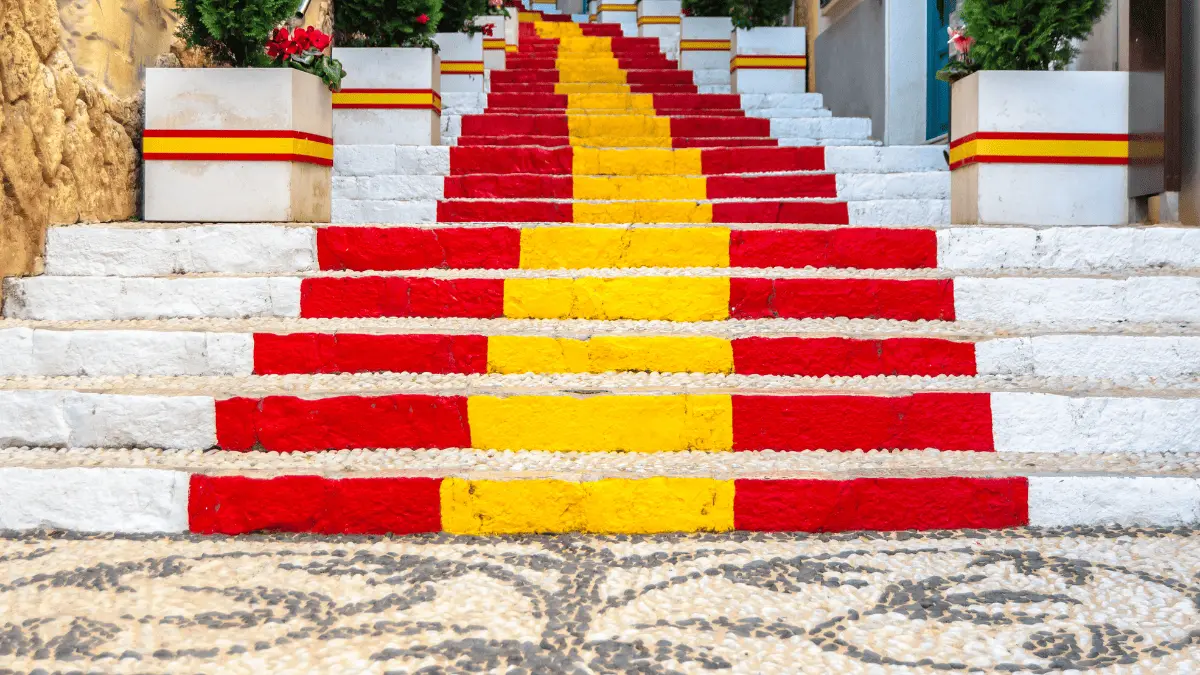
A low-angle view of the iconic Calpe Spanish flag steps on Carrer de Puchalt, featuring vibrant red and yellow stripes, white-washed walls, and Mediterranean flower pots.

Calpe’s Spanish flag steps are easy to recognise in photographs, but less obvious to find when you’re walking around town. They’re tucked into the old town rather than along the seafront, making them a nice stop if you’re exploring the historic centre.

Where Are the Spanish Flag Steps in Calpe?

You’ll find the painted staircase on Carrer de Puchalt, in Calpe’s historic old town.

Google Maps: Carrer de Puchalt, 03710 Calp, Alicante

From the central part of Arenal-Bol beach, allow around 10 to 15 minutes on foot. The route takes you inland and uphill towards the old town. If you’re coming from the marina or Peñón de Ifach area, it’s closer to a 30-minute walk, depending on where you start.

You might also see directions mentioning Carrer de Pedro García Ortiz. That street leads towards Carrer de Puchalt, but the painted staircase itself is on Puchalt.

If you’re driving, park in one of the town centre car parks and walk up to Carrer de Puchalt. The steps are in the old town’s narrow streets, where you can’t park.

Are the Spanish Flag Steps Worth Visiting?

Yes, especially if you’re already nearby. The red-and-yellow staircase is smaller than many photographs suggest, but the whitewashed houses, balconies and plants on either side make it a lovely little spot for a photo.

The flag design actually dates back to 1982, when local residents painted the staircase for a street-decorating competition during celebrations for the Cristo del Sudor. The colours have been maintained over the years, and the steps have become one of Calpe’s best-known landmarks.

For the best photograph, stand at the bottom of Carrer de Puchalt and look uphill. From there, you can capture the flag pattern with the surrounding buildings framing the staircase. Moving a little further back helps you fit more of the street into the picture.

People live along Carrer de Puchalt, so be considerate when taking photographs and leave doorways and the staircase clear.

When Is the Best Time to Visit?

Early morning is a good time to visit the Spanish flag steps if you want quieter streets and fewer people in your photographs. Carrer de Puchalt is narrow, though, so the staircase can be in shade even on a sunny day. The light will depend on the time of year.

Late afternoon is another good option, particularly in July and August when walking uphill in the midday heat can be uncomfortable. Weekends and busy holiday periods will bring more visitors stopping for photos.

The steps are on a public street, so they’re free to visit and there are no set opening hours. Allow around 5 to 10 minutes to see them and take a few photographs. If you’re exploring the rest of Calpe’s old town, I’d set aside at least 45 minutes to an hour.

Are the Spanish Flag Steps Accessible?

The Spanish flag steps are steep, so they can be difficult if you have limited mobility or struggle with stairs. The surrounding old-town streets also have slopes and some uneven paving, so comfortable shoes with a good grip are a sensible choice, especially after rain.

The staircase itself isn’t wheelchair accessible, and carrying a pushchair up or down would be awkward. However, you can still see the painted steps without climbing them.

A published accessible route through Calpe’s old town approaches Carrer de Puchalt via Carrer de Pedro García Ortiz. However, some of the streets are quite steep, and wheelchair users may need assistance. If you need step-free access, I’d recommend checking the best route with Calpe’s tourist office before visiting.

What Else Can You See Near the Spanish Flag Steps?

The steps are close to several of Calpe’s historic landmarks, so you can easily see a few more places while you’re in the area. Our Calpe Old Town guide covers the wider neighbourhood if you fancy exploring further.

Forat de la Mar is an opening in the old town walls, created after the threat of pirate attacks had passed. Local fishermen once gathered nearby to check the sea conditions before heading out.

Torreó de la Peça formed part of Calpe’s former defences and now houses the Museo del Coleccionismo, which hosts temporary exhibitions.

Around Plaza de la Villa, you’ll find the Iglesia Antigua, a fortified church dating back to the 15th century. It stands beside the much newer Nuestra Señora de las Nieves church, making the difference in architecture easy to see.

There are also plenty of narrow streets, colourful buildings and small bars around the historic centre if you fancy stopping for a drink afterwards.

Sina
Written by

Sina

Founder of Solinea Real Estate, based in Calpe. Sina helps buyers and sellers across the Costa Blanca North with honest, local guidance.

Stay informed

Join the Calpe buyer list

New listings and local market updates for Calpe and the Costa Blanca North. Occasional emails only.

No spam, and you can unsubscribe any time.

Calpe Spanish Flag Steps: Where to Find Them and What to Expect

Calpe’s Spanish flag steps are easy to recognise in photographs, but less obvious to find when you’re walking around town. They’re tucked into the old town rather than along the seafront, making them a nice stop if you’re exploring the historic centre.

Where Are the Spanish Flag Steps in Calpe?

You’ll find the painted staircase on Carrer de Puchalt, in Calpe’s historic old town.

Google Maps: Carrer de Puchalt, 03710 Calp, Alicante

From the central part of Arenal-Bol beach, allow around 10 to 15 minutes on foot. The route takes you inland and uphill towards the old town. If you’re coming from the marina or Peñón de Ifach area, it’s closer to a 30-minute walk, depending on where you start.

You might also see directions mentioning Carrer de Pedro García Ortiz. That street leads towards Carrer de Puchalt, but the painted staircase itself is on Puchalt.

If you’re driving, park in one of the town centre car parks and walk up to Carrer de Puchalt. The steps are in the old town’s narrow streets, where you can’t park.

Are the Spanish Flag Steps Worth Visiting?

Yes, especially if you’re already nearby. The red-and-yellow staircase is smaller than many photographs suggest, but the whitewashed houses, balconies and plants on either side make it a lovely little spot for a photo.

The flag design actually dates back to 1982, when local residents painted the staircase for a street-decorating competition during celebrations for the Cristo del Sudor. The colours have been maintained over the years, and the steps have become one of Calpe’s best-known landmarks.

For the best photograph, stand at the bottom of Carrer de Puchalt and look uphill. From there, you can capture the flag pattern with the surrounding buildings framing the staircase. Moving a little further back helps you fit more of the street into the picture.

People live along Carrer de Puchalt, so be considerate when taking photographs and leave doorways and the staircase clear.

When Is the Best Time to Visit?

Early morning is a good time to visit the Spanish flag steps if you want quieter streets and fewer people in your photographs. Carrer de Puchalt is narrow, though, so the staircase can be in shade even on a sunny day. The light will depend on the time of year.

Late afternoon is another good option, particularly in July and August when walking uphill in the midday heat can be uncomfortable. Weekends and busy holiday periods will bring more visitors stopping for photos.

The steps are on a public street, so they’re free to visit and there are no set opening hours. Allow around 5 to 10 minutes to see them and take a few photographs. If you’re exploring the rest of Calpe’s old town, I’d set aside at least 45 minutes to an hour.

Are the Spanish Flag Steps Accessible?

The Spanish flag steps are steep, so they can be difficult if you have limited mobility or struggle with stairs. The surrounding old-town streets also have slopes and some uneven paving, so comfortable shoes with a good grip are a sensible choice, especially after rain.

The staircase itself isn’t wheelchair accessible, and carrying a pushchair up or down would be awkward. However, you can still see the painted steps without climbing them.

A published accessible route through Calpe’s old town approaches Carrer de Puchalt via Carrer de Pedro García Ortiz. However, some of the streets are quite steep, and wheelchair users may need assistance. If you need step-free access, I’d recommend checking the best route with Calpe’s tourist office before visiting.

What Else Can You See Near the Spanish Flag Steps?

The steps are close to several of Calpe’s historic landmarks, so you can easily see a few more places while you’re in the area. Our Calpe Old Town guide covers the wider neighbourhood if you fancy exploring further.

Forat de la Mar is an opening in the old town walls, created after the threat of pirate attacks had passed. Local fishermen once gathered nearby to check the sea conditions before heading out.

Torreó de la Peça formed part of Calpe’s former defences and now houses the Museo del Coleccionismo, which hosts temporary exhibitions.

Around Plaza de la Villa, you’ll find the Iglesia Antigua, a fortified church dating back to the 15th century. It stands beside the much newer Nuestra Señora de las Nieves church, making the difference in architecture easy to see.

There are also plenty of narrow streets, colourful buildings and small bars around the historic centre if you fancy stopping for a drink afterwards.

Leave a Comment