
Home / Resources / What Does a Notary Do When Buying Property in Spain?
buyers

What Does a Notary Do When Buying Property in Spain?

Sina By Sina 9 November 2026 7 min read
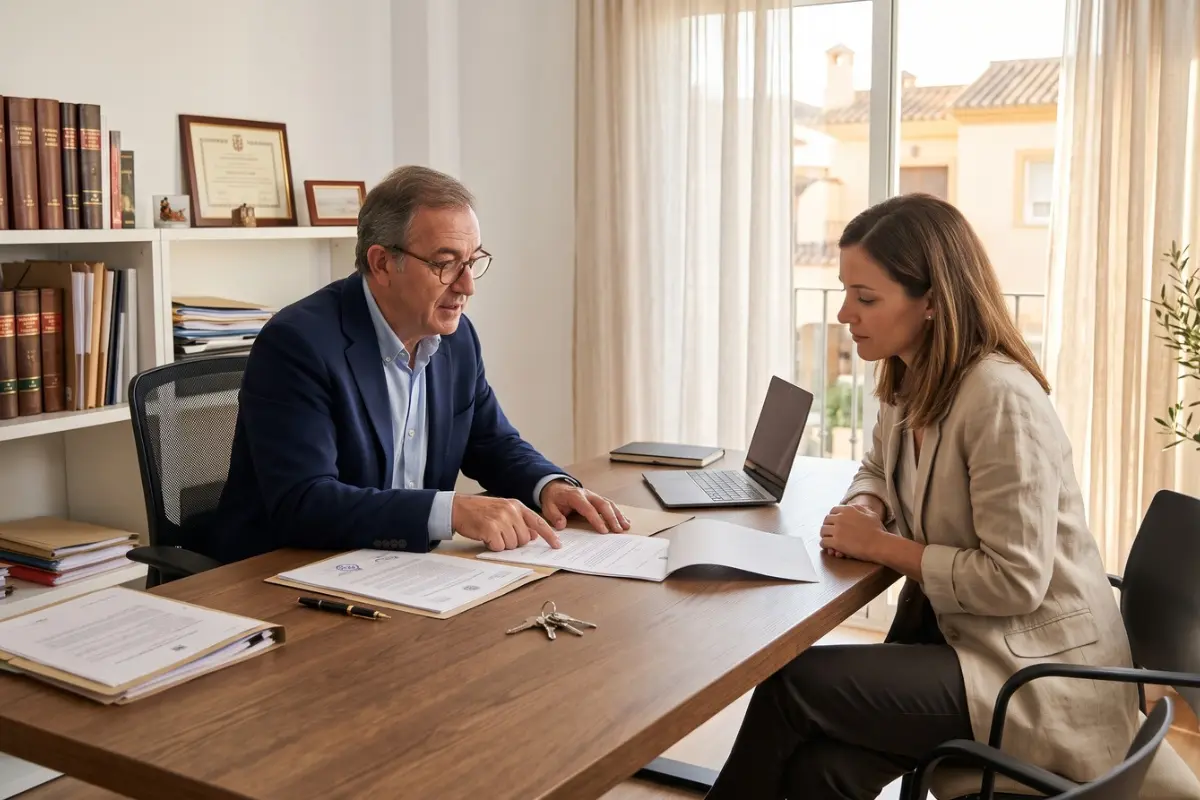
Spanish notary explaining property purchase documents to a buyer during a meeting at his office.

When you buy property in Spain, a notary checks the legal formalities of the sale and authorises the public title deed, known as the escritura pública. They check who owns the property, look for registered mortgages or other charges and explain what everyone is signing.

But the notary doesn’t investigate every potential problem with the property. Some of the most important checks need to happen long before you reach the signing appointment.

Spanish Notary vs Property Lawyer: Who Does What?

The notary acts impartially towards both buyer and seller. Your independent property lawyer works specifically for you, reviewing contracts, investigating potential problems and advising you on anything that could affect your decision to buy.
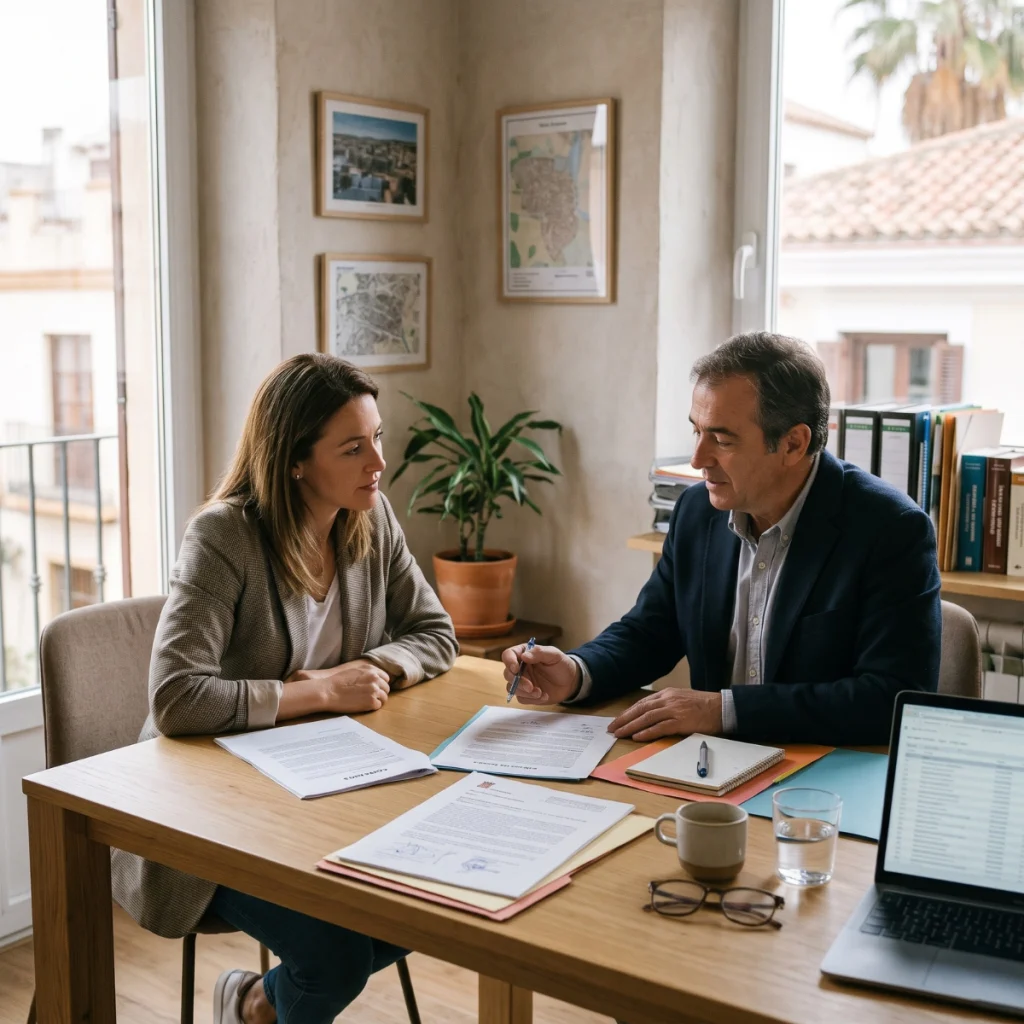
Property buyer reviewing Spanish property purchase documents with a legal adviser in an office.

You can also ask a notary for free legal advice before completion.

That distinction matters with older villas in Calpe and the surrounding areas, particularly those that have been extended or altered over the years.

Imagine finding a villa with a swimming pool, converted underbuild and enclosed terrace. Everything looks fine during the viewing, but the pool isn’t correctly recorded in the Catastro, or the terrace doesn’t appear in the approved building plans.

The notary may pick up differences in the paperwork, but signing the deed doesn’t automatically make an unauthorised alteration legal. Your lawyer should investigate what those differences mean and, if necessary, involve an architect.

A building survey is a separate job. If you’re concerned about the roof, structure or general condition of an older villa, consider arranging an independent technical inspection.

We’d recommend appointing your own Spanish property lawyer before signing a reservation agreement or arras contract. These agreements can create binding obligations, and the wording matters if you’re paying a deposit.

What a Spanish Notary Checks Before Signing

The notary’s office starts checking the paperwork well before signing day. They need to know who owns the property, exactly what’s being sold and how you’re paying for it.
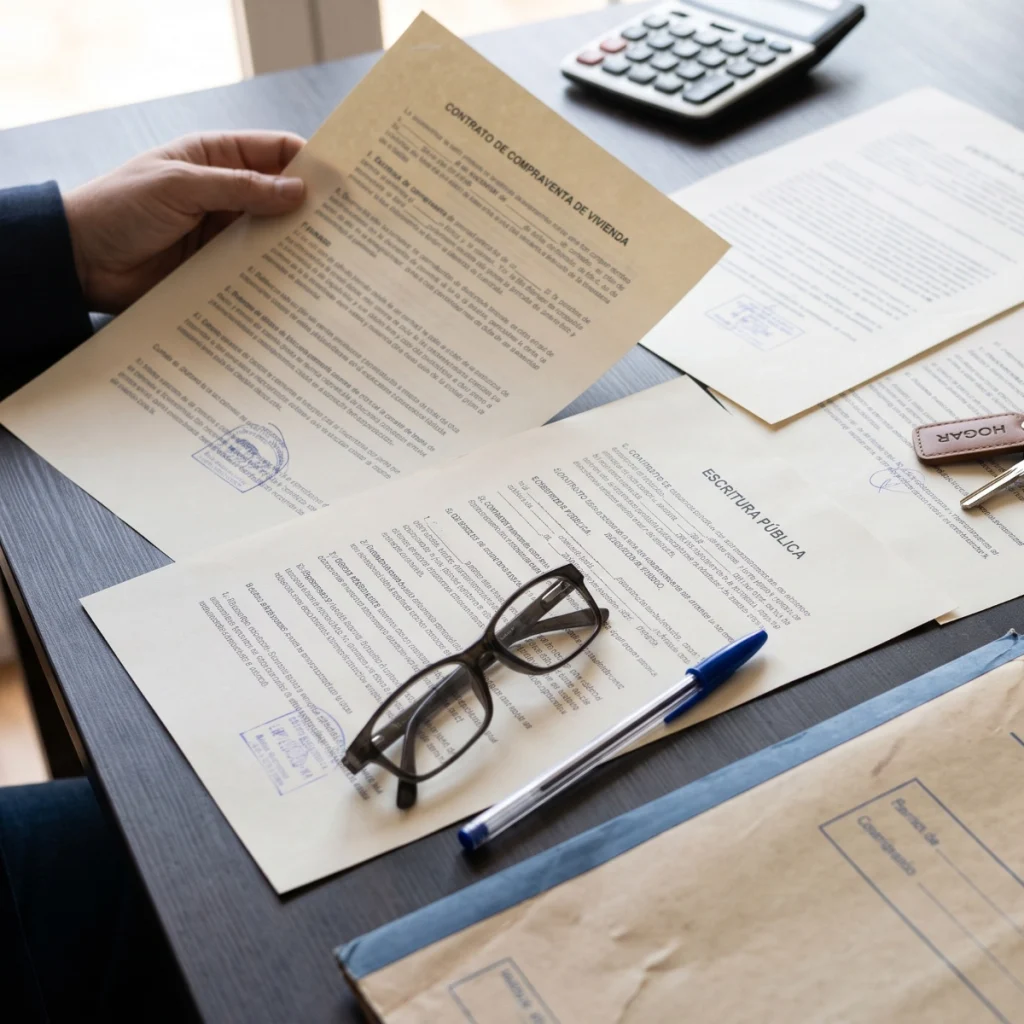
Spanish property purchase contract and public title deed being reviewed alongside supporting paperwork.

The notary checks the buyer’s and seller’s identities and makes sure everyone signing has the legal authority to do so. This includes checking any powers of attorney and obtaining up-to-date information from the Registro de la Propiedad (Land Registry) to confirm registered ownership and identify mortgages or other charges.

A sale can still go ahead with an outstanding mortgage, provided there are clear arrangements to repay the loan and cancel the registered charge.

For apartments, the seller normally provides a certificate showing whether community fees are outstanding, unless you expressly waive that requirement. It’s also worth reviewing the community meeting minutes, which may reveal approved repairs, lift replacements or other major expenses requiring an additional payment known as a derrama. Your lawyer should check these separately.

The notary also checks the property’s cadastral reference and relevant paperwork, including the energy performance certificate and IBI council tax details. The seller must also declare whether the property is occupied or rented, which is particularly important if you’re expecting to move in straight away.

The purchase price and payments need to be properly recorded too. That includes deposits, bank transfers and the remaining balance. Confirm the figures and payment arrangements with your bank and lawyer beforehand.

Missing paperwork, unresolved charges or incorrect payment details can delay signing, even when both sides are ready.

At the Notary: What Happens on Completion Day?

By completion day, the terms of the sale and final payment arrangements should already be settled. The appointment is there to formalise the purchase, not reopen negotiations.
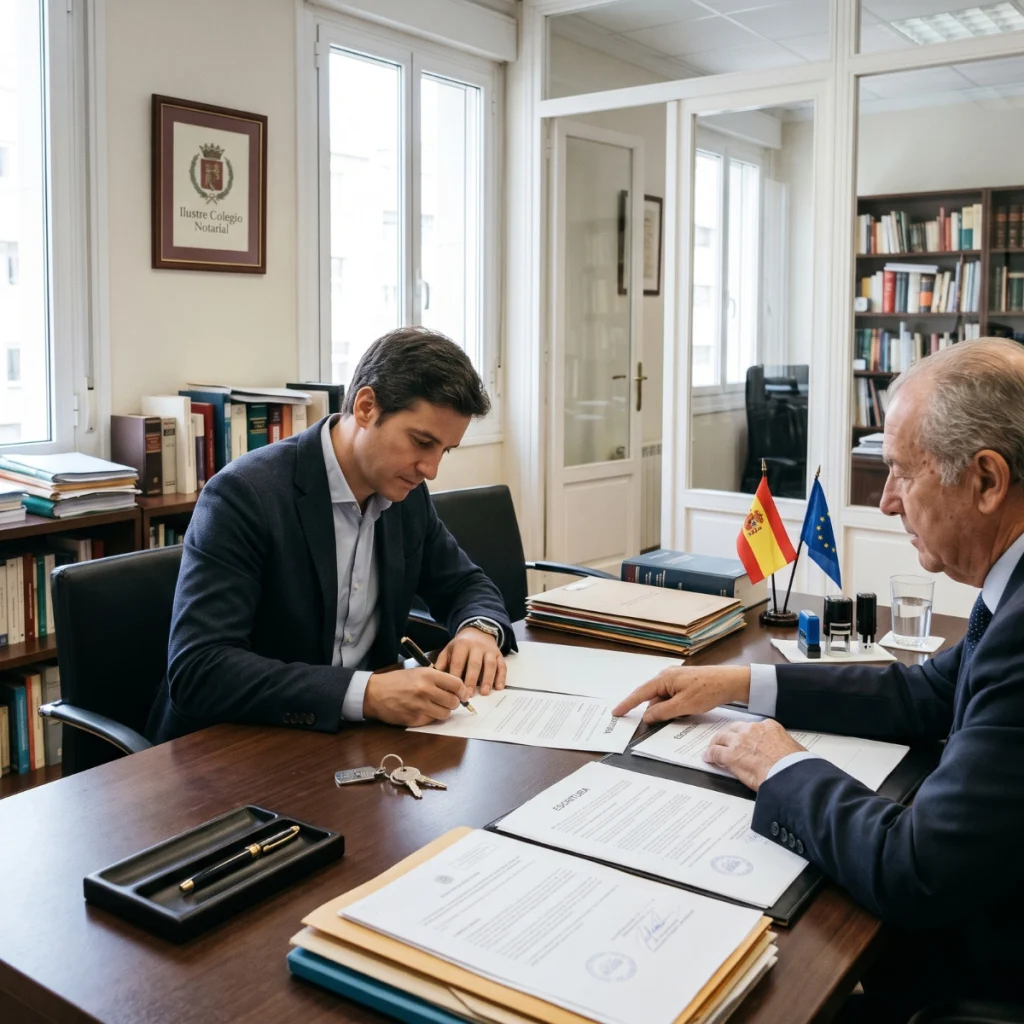
Property buyer signing documents at a Spanish notary's office during completion of a property purchase.

You can generally choose which notary handles your purchase, even if the seller or bank has suggested a particular office.

You and the seller normally attend in person. If either of you can’t be there, a representative can sign using a valid power of attorney. Bring your passport or other accepted identification, and check your NIE details and any power of attorney documents with your lawyer beforehand.

At the appointment, the notary explains the title deed and answers questions before you sign. If something differs from what you’ve agreed, ask for clarification. Arrange suitable language support with the notary’s office in advance if you’re not comfortable following legal Spanish.

If your mortgage falls under Spain’s 2019 mortgage law, the bank must give you the required documents, including the FEIN and FiAE, at least ten calendar days before signing. You’ll also need to meet the notary separately no later than the day before the mortgage deed is signed.

The remaining purchase money is paid according to the arrangements agreed beforehand, and the keys are normally handed over. If the seller is a Spanish non-resident for tax purposes, you’ll generally keep back 3% of the agreed price for the tax authorities. This is deducted from the seller’s proceeds, so it isn’t an extra charge on top of your purchase price.

We’d also recommend a final property visit shortly before signing. Compare the property’s condition and any furniture included in the sale with what was agreed. Take the inventory with you if one forms part of the contract.

Notary Fees in Spain: How Much Will You Pay?

Notary fees for buying property in Spain often fall somewhere around €600 to €1,200, although the actual cost can be higher or lower. The fees follow a government-regulated tariff, so notaries can’t simply set their own prices. What you actually pay depends on the purchase price, the paperwork involved and any extra copies you need.
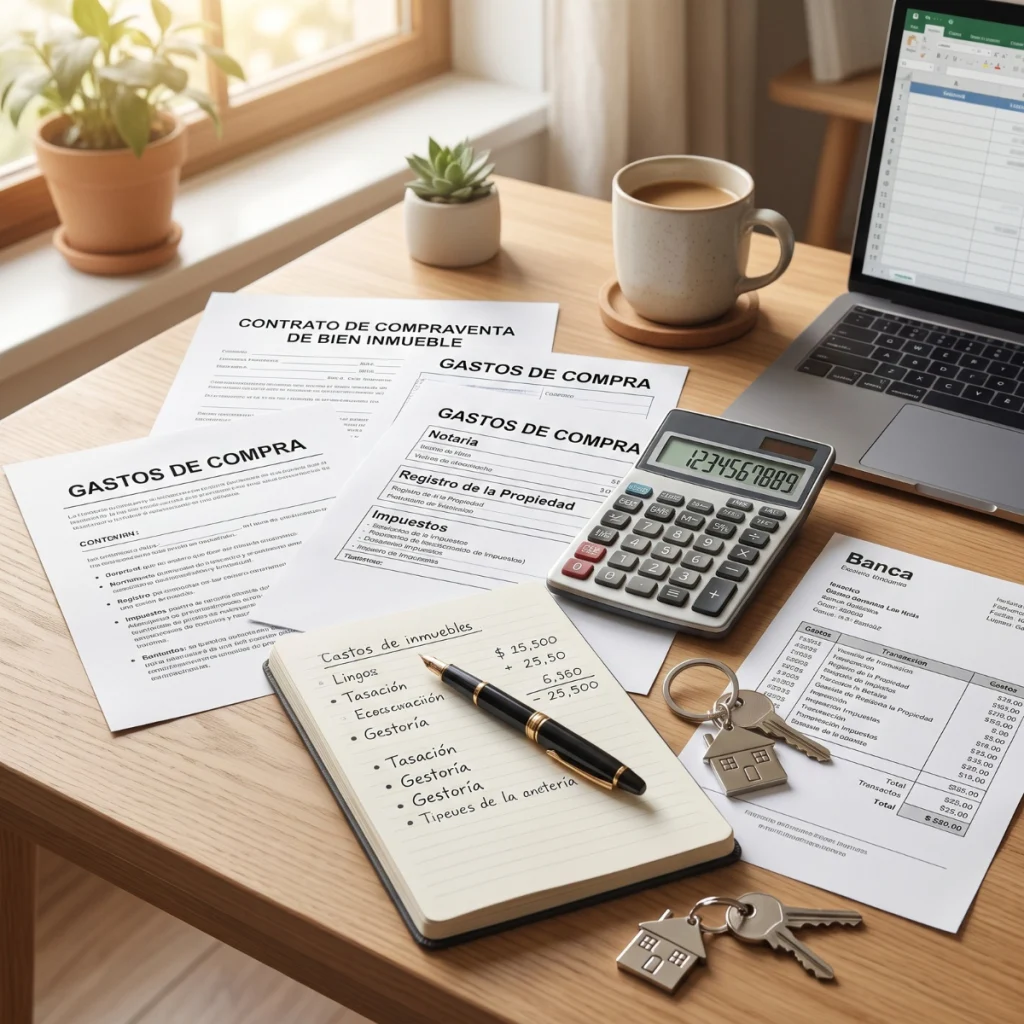
Calculator beside Spanish property purchase cost documents, including notary fees, taxes and registration expenses.

Who pays is worth checking before signing a purchase contract. Under Spain’s Civil Code, the seller normally pays the cost of executing the deed, while the buyer pays for the first copy and subsequent expenses, unless both parties agree otherwise.

Many purchase contracts place these fees on the buyer instead, so the terms of your agreement matter.

If you’re taking out a mortgage covered by Spain’s 2019 law, the bank pays the notary and registration costs associated with the mortgage itself. You’ll generally pay for the property valuation and any additional copies of the mortgage deed you request.

The purchase also has its own taxes, Land Registry charges and legal fees, which are separate from the notary’s invoice.

If you’re transferring one amount to cover several expenses, ask for an itemised breakdown showing exactly what’s included.

After Signing the Deed: Taxes and Property Registration

The paperwork carries on after the keys change hands. Taxes, ownership records and a few practical arrangements still need attention.
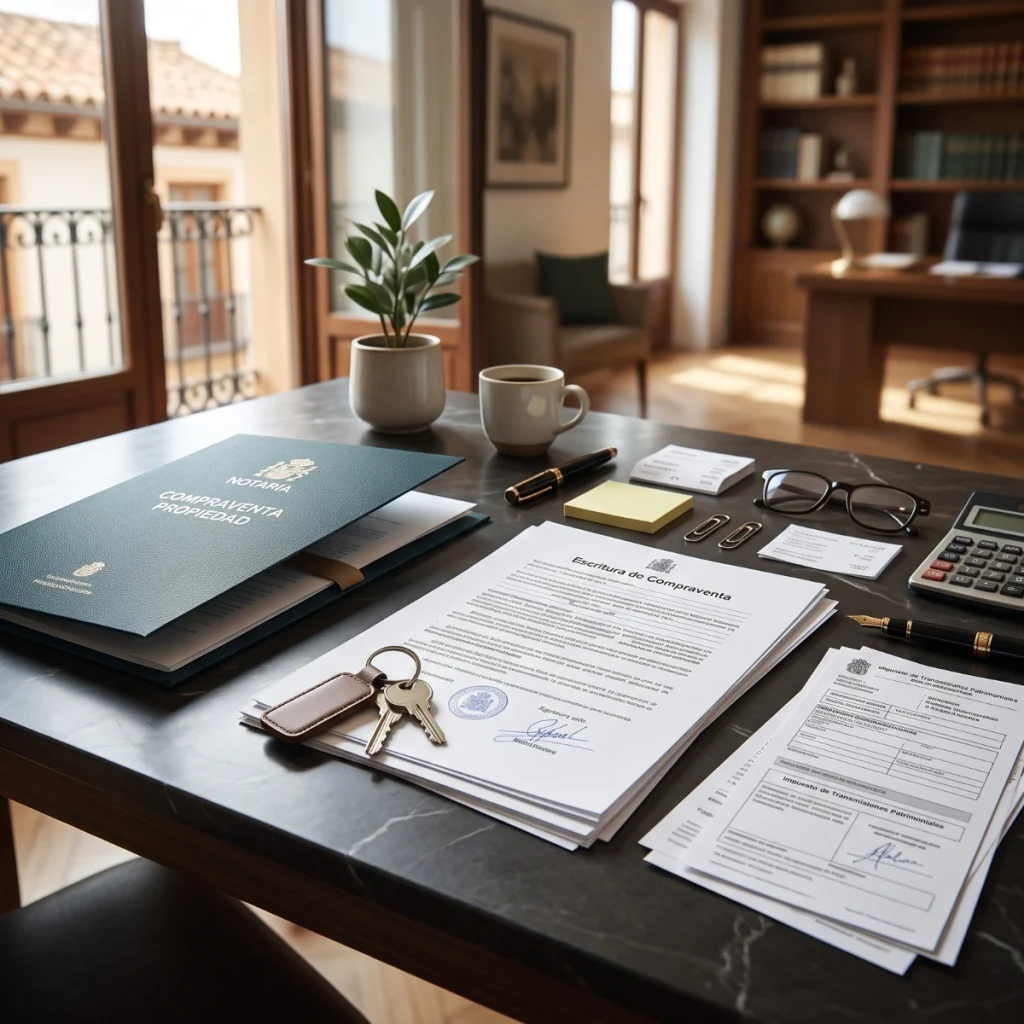
Spanish property purchase deed, tax paperwork and house keys arranged on a desk after completion.

The signed deed can be sent electronically to the Land Registry, including through the notary’s office. That starts the registration process, but the necessary tax documents and other paperwork still need to be dealt with before registration is complete.

Buying a resale property in Calpe generally means paying Property Transfer Tax (ITP). New-build purchases from a developer are usually subject to VAT and stamp duty (AJD) instead. Your lawyer or gestoría should confirm which taxes apply and make sure everything is filed on time.

If you kept back the 3% for a non-resident seller, that money must generally be paid to the Spanish Tax Agency within one month of the sale, using Modelo 211.

Once a seller’s mortgage is repaid, the registered charge also needs cancelling at the Land Registry. Until that’s done, it may still appear on the property record.

You’ll also need to transfer electricity and water accounts, ensure the community administrator has your details if you’re buying an apartment, and check that future IBI council tax bills are issued correctly.

At Solinea, we can help coordinate the practical handover, while your lawyer or gestoría handles the legal and tax formalities. Make sure those responsibilities are clear, and keep copies of the tax receipts and final registered deed once they’re available.

Sina
Written by

Sina

Founder of Solinea Real Estate, based in Calpe. Sina helps buyers and sellers across the Costa Blanca North with honest, local guidance.


Stay informed

Join the Calpe buyer list

New listings and local market updates for Calpe and the Costa Blanca North. Occasional emails only.

No spam, and you can unsubscribe any time.

What Does a Notary Do When Buying Property in Spain?

When you buy property in Spain, a notary checks the legal formalities of the sale and authorises the public title deed, known as the escritura pública. They check who owns the property, look for registered mortgages or other charges and explain what everyone is signing.

But the notary doesn’t investigate every potential problem with the property. Some of the most important checks need to happen long before you reach the signing appointment.

Spanish Notary vs Property Lawyer: Who Does What?

The notary acts impartially towards both buyer and seller. Your independent property lawyer works specifically for you, reviewing contracts, investigating potential problems and advising you on anything that could affect your decision to buy.

Property buyer reviewing Spanish property purchase documents with a legal adviser in an office.

You can also ask a notary for free legal advice before completion.

That distinction matters with older villas in Calpe and the surrounding areas, particularly those that have been extended or altered over the years.

Imagine finding a villa with a swimming pool, converted underbuild and enclosed terrace. Everything looks fine during the viewing, but the pool isn’t correctly recorded in the Catastro, or the terrace doesn’t appear in the approved building plans.

The notary may pick up differences in the paperwork, but signing the deed doesn’t automatically make an unauthorised alteration legal. Your lawyer should investigate what those differences mean and, if necessary, involve an architect.

A building survey is a separate job. If you’re concerned about the roof, structure or general condition of an older villa, consider arranging an independent technical inspection.

We’d recommend appointing your own Spanish property lawyer before signing a reservation agreement or arras contract. These agreements can create binding obligations, and the wording matters if you’re paying a deposit.

What a Spanish Notary Checks Before Signing

The notary’s office starts checking the paperwork well before signing day. They need to know who owns the property, exactly what’s being sold and how you’re paying for it.

Spanish property purchase contract and public title deed being reviewed alongside supporting paperwork.

The notary checks the buyer’s and seller’s identities and makes sure everyone signing has the legal authority to do so. This includes checking any powers of attorney and obtaining up-to-date information from the Registro de la Propiedad (Land Registry) to confirm registered ownership and identify mortgages or other charges.

A sale can still go ahead with an outstanding mortgage, provided there are clear arrangements to repay the loan and cancel the registered charge.

For apartments, the seller normally provides a certificate showing whether community fees are outstanding, unless you expressly waive that requirement. It’s also worth reviewing the community meeting minutes, which may reveal approved repairs, lift replacements or other major expenses requiring an additional payment known as a derrama. Your lawyer should check these separately.

The notary also checks the property’s cadastral reference and relevant paperwork, including the energy performance certificate and IBI council tax details. The seller must also declare whether the property is occupied or rented, which is particularly important if you’re expecting to move in straight away.

The purchase price and payments need to be properly recorded too. That includes deposits, bank transfers and the remaining balance. Confirm the figures and payment arrangements with your bank and lawyer beforehand.

Missing paperwork, unresolved charges or incorrect payment details can delay signing, even when both sides are ready.

At the Notary: What Happens on Completion Day?

By completion day, the terms of the sale and final payment arrangements should already be settled. The appointment is there to formalise the purchase, not reopen negotiations.

Property buyer signing documents at a Spanish notary's office during completion of a property purchase.

You can generally choose which notary handles your purchase, even if the seller or bank has suggested a particular office.

You and the seller normally attend in person. If either of you can’t be there, a representative can sign using a valid power of attorney. Bring your passport or other accepted identification, and check your NIE details and any power of attorney documents with your lawyer beforehand.

At the appointment, the notary explains the title deed and answers questions before you sign. If something differs from what you’ve agreed, ask for clarification. Arrange suitable language support with the notary’s office in advance if you’re not comfortable following legal Spanish.

If your mortgage falls under Spain’s 2019 mortgage law, the bank must give you the required documents, including the FEIN and FiAE, at least ten calendar days before signing. You’ll also need to meet the notary separately no later than the day before the mortgage deed is signed.

The remaining purchase money is paid according to the arrangements agreed beforehand, and the keys are normally handed over. If the seller is a Spanish non-resident for tax purposes, you’ll generally keep back 3% of the agreed price for the tax authorities. This is deducted from the seller’s proceeds, so it isn’t an extra charge on top of your purchase price.

We’d also recommend a final property visit shortly before signing. Compare the property’s condition and any furniture included in the sale with what was agreed. Take the inventory with you if one forms part of the contract.

Notary Fees in Spain: How Much Will You Pay?

Notary fees for buying property in Spain often fall somewhere around €600 to €1,200, although the actual cost can be higher or lower. The fees follow a government-regulated tariff, so notaries can’t simply set their own prices. What you actually pay depends on the purchase price, the paperwork involved and any extra copies you need.

Calculator beside Spanish property purchase cost documents, including notary fees, taxes and registration expenses.

Who pays is worth checking before signing a purchase contract. Under Spain’s Civil Code, the seller normally pays the cost of executing the deed, while the buyer pays for the first copy and subsequent expenses, unless both parties agree otherwise.

Many purchase contracts place these fees on the buyer instead, so the terms of your agreement matter.

If you’re taking out a mortgage covered by Spain’s 2019 law, the bank pays the notary and registration costs associated with the mortgage itself. You’ll generally pay for the property valuation and any additional copies of the mortgage deed you request.

The purchase also has its own taxes, Land Registry charges and legal fees, which are separate from the notary’s invoice.

If you’re transferring one amount to cover several expenses, ask for an itemised breakdown showing exactly what’s included.

After Signing the Deed: Taxes and Property Registration

The paperwork carries on after the keys change hands. Taxes, ownership records and a few practical arrangements still need attention.

Spanish property purchase deed, tax paperwork and house keys arranged on a desk after completion.

The signed deed can be sent electronically to the Land Registry, including through the notary’s office. That starts the registration process, but the necessary tax documents and other paperwork still need to be dealt with before registration is complete.

Buying a resale property in Calpe generally means paying Property Transfer Tax (ITP). New-build purchases from a developer are usually subject to VAT and stamp duty (AJD) instead. Your lawyer or gestoría should confirm which taxes apply and make sure everything is filed on time.

If you kept back the 3% for a non-resident seller, that money must generally be paid to the Spanish Tax Agency within one month of the sale, using Modelo 211.

Once a seller’s mortgage is repaid, the registered charge also needs cancelling at the Land Registry. Until that’s done, it may still appear on the property record.

You’ll also need to transfer electricity and water accounts, ensure the community administrator has your details if you’re buying an apartment, and check that future IBI council tax bills are issued correctly.

At Solinea, we can help coordinate the practical handover, while your lawyer or gestoría handles the legal and tax formalities. Make sure those responsibilities are clear, and keep copies of the tax receipts and final registered deed once they’re available.

Leave a Comment